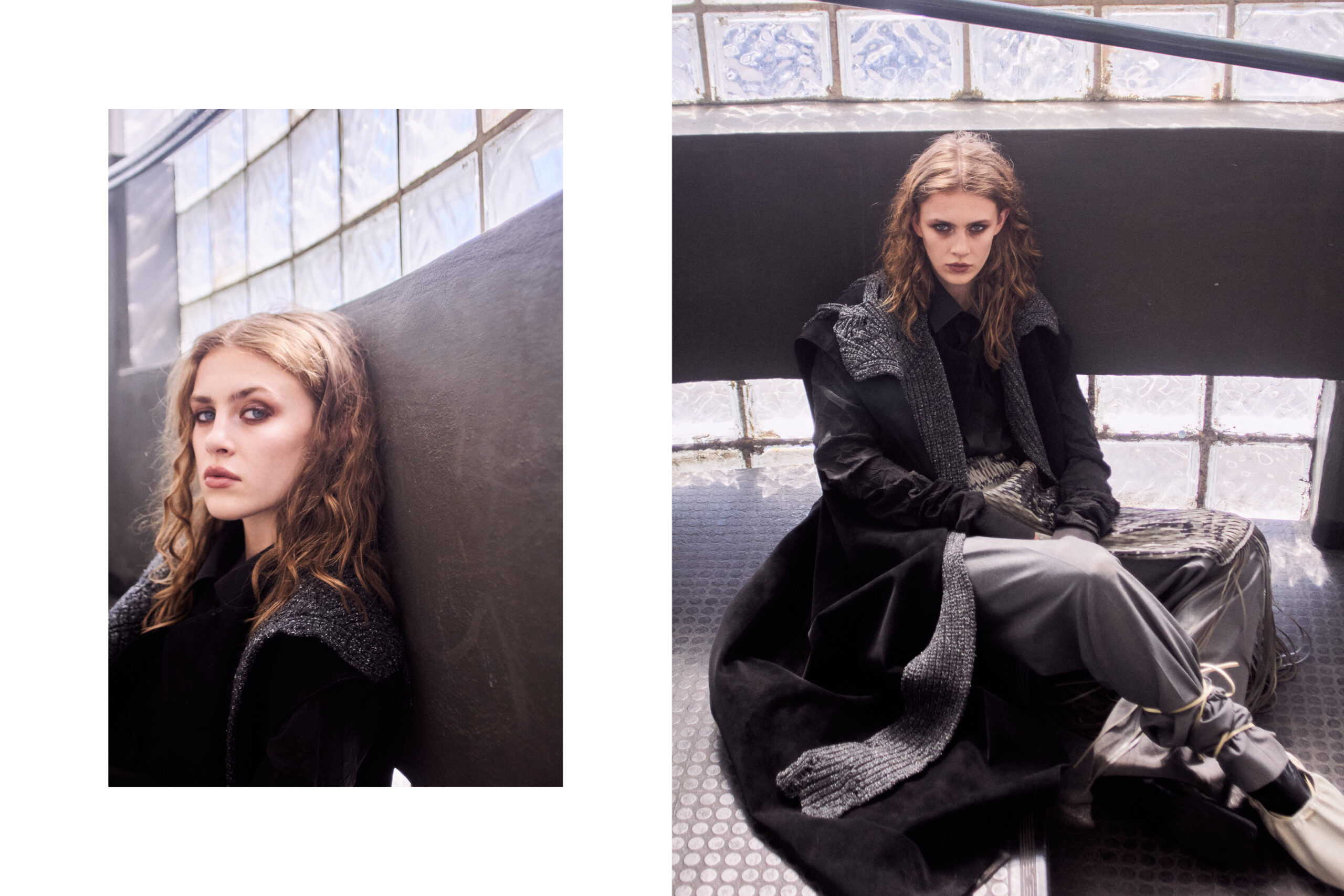
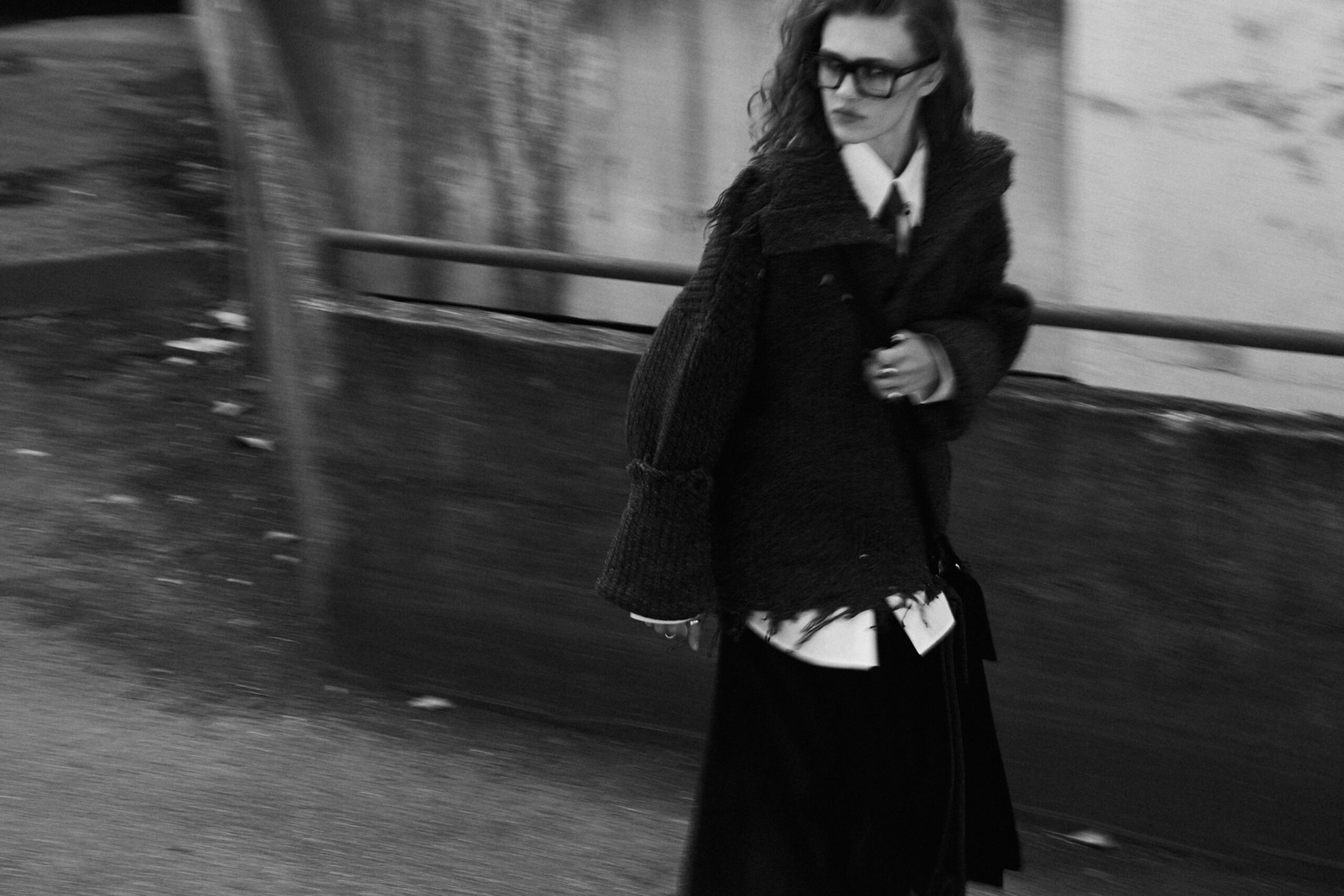
Last January we had the chance to come and see your FW25 collection: it was an amazing experience! We walked around the last corner before reaching the location and the most beautiful glimpse of Paris appeared! Seeing the majestic Eiffel Tower right around the place really deepened the emotional weight of the occurrence. Not to mention the insides of the stunning venue you selected for the show. It truly left us wondering: what’s the criteria behind the selection and choice of the spaces you scout to present your newest collections? Is everything thought out and calculated to immerse your hosts in the experience completely or do you mainly care for the actual location where the catwalk is and maybe this was just a coincidence?
S: Every venue we choose for a collection is the result of careful consideration. First, the space and its surroundings must suit the theme and atmosphere of the collection. Second, the interior must both complement the styling of the garments and provide enough space for all teams involved. Lastly, we must consider the logistics of Fashion Week, ensuring the venue is easily accessible among the other shows, so its location won’t cause inconvenience. Every venue thus requires immense effort in selection, planning, and design.
For the FW25 collection, themed The Ancient Tea Horse Road, we intentionally chose Cité de l’Architecture et du Patrimoine as the venue. SEAN SUEN has always aimed to use fashion as a cultural vehicle to foster both physical and spiritual flows between East and West. This collection reinterprets the spirit and multi-ethnic aesthetics of an ancient Eastern trade route through a contemporary fashion lens, creating a bridge that connects past and future across time and space.
This museum, a core institution of French architectural heritage, not only protects history but also explores urbanization and sustainability from a modern viewpoint. It serves as a bridge between architecture and society. Choosing this location symbolizes our intent to use clothing as a medium to “connect past and future,” and reinforces the brand’s mission of promoting cultural exchange between East and West. Through both the garments and the venue, we hope to convey our respect for culture and our dedication to thoughtful design.
When you’re working on a new collection, what comes up to your mind first in terms of steps? What we mean is: if you imagine your finalized collection do you see structure, colors, shapes or fabrics first? Knowing you have a graphic design and architecture background as well, it would be really interesting to find out about the development of the fabric selection, since every look seems to include a nice variety of them. Could you explain this side of your process?
S: After settling on a theme for the collection, when it comes to transforming the concept into tangible garments, the first thing I focus on is fabric. To me, fabric is the origin of clothing design. In ancient times, people used natural materials like animal hides, leaves, and grass to cover themselves. As civilization evolved, the invention of fabric gave clothing a new dimensionality—texture, structure, function, color, style, and more.
I firmly believe that each fabric carries its own strengths and emotional tone. With my background in graphic and architectural design, I enjoy discovering how to present each fabric through the structure, lines, and surfaces of a garment. I see each collection as the construction of a multi-dimensional, emotionally rich “fashion space.” The combination and contrast of different fabrics are like the materials used in architectural design—only thoughtful and deliberate use can ground the collection’s tone and enhance the expression of its core idea. It’s this synergy that makes the concept fuller and more vibrant.
We read about your focus in staying in touch with your culture and your roots throughout all your collections. Does it involve recalling your own family, friends and yourself as well? Is theresomeone close to you, a mentor, family member or friend, whose opinion you value the most? What’s the main goal and ideal receiver of the conceptual message behind your creations?
S: The place we grow up in inevitably shapes us—its culture seeps into our thinking and becomes part of who we are. That kind of influence is impossible to ignore. My designs are deeply rooted in Eastern aesthetics and culture. My family, friends, and even fleeting encounters have all impacted how I perceive the world. Through others, I often uncover new facets of myself and see the diversity of human awareness.
I respect everyone’s uniqueness and place high value on the input of every collaborator during the creative process. I believe fashion design should go beyond the material—it should be a bridge for communication. The creator is also the first recipient. If the creators can connect with each other and with the clothing, then the clothing can, in turn, connect with the wearer and between wearers. I hope that everyone who loves fashion, culture, and aesthetics can experience something meaningful through SEAN SUEN’s designs.
How about a funny curiosity! Have you ever had a weird or absurd thought process that started from observing something simple and led you to creating a whole concept and consequentpiece of clothing, look or even collection?
S: Yes, many times. A moment of pain, a hangover, a dream—these personal experiences or observations of human emotion fluctuations have all deeply moved me. They’ve sparked ideas that later became full-fledged collections inspired by those fleeting states of consciousness.