LEVANTE

Talent Levante
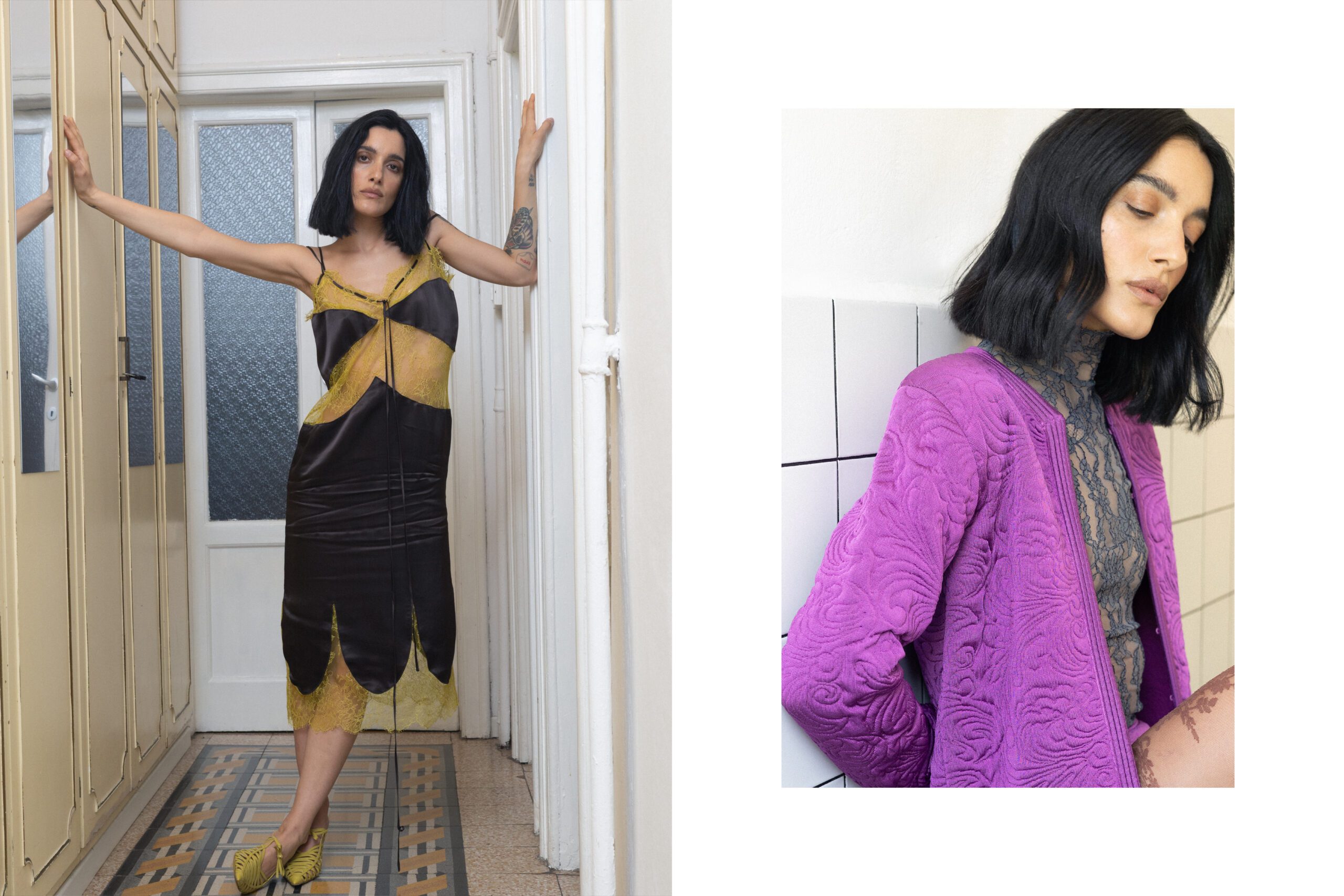
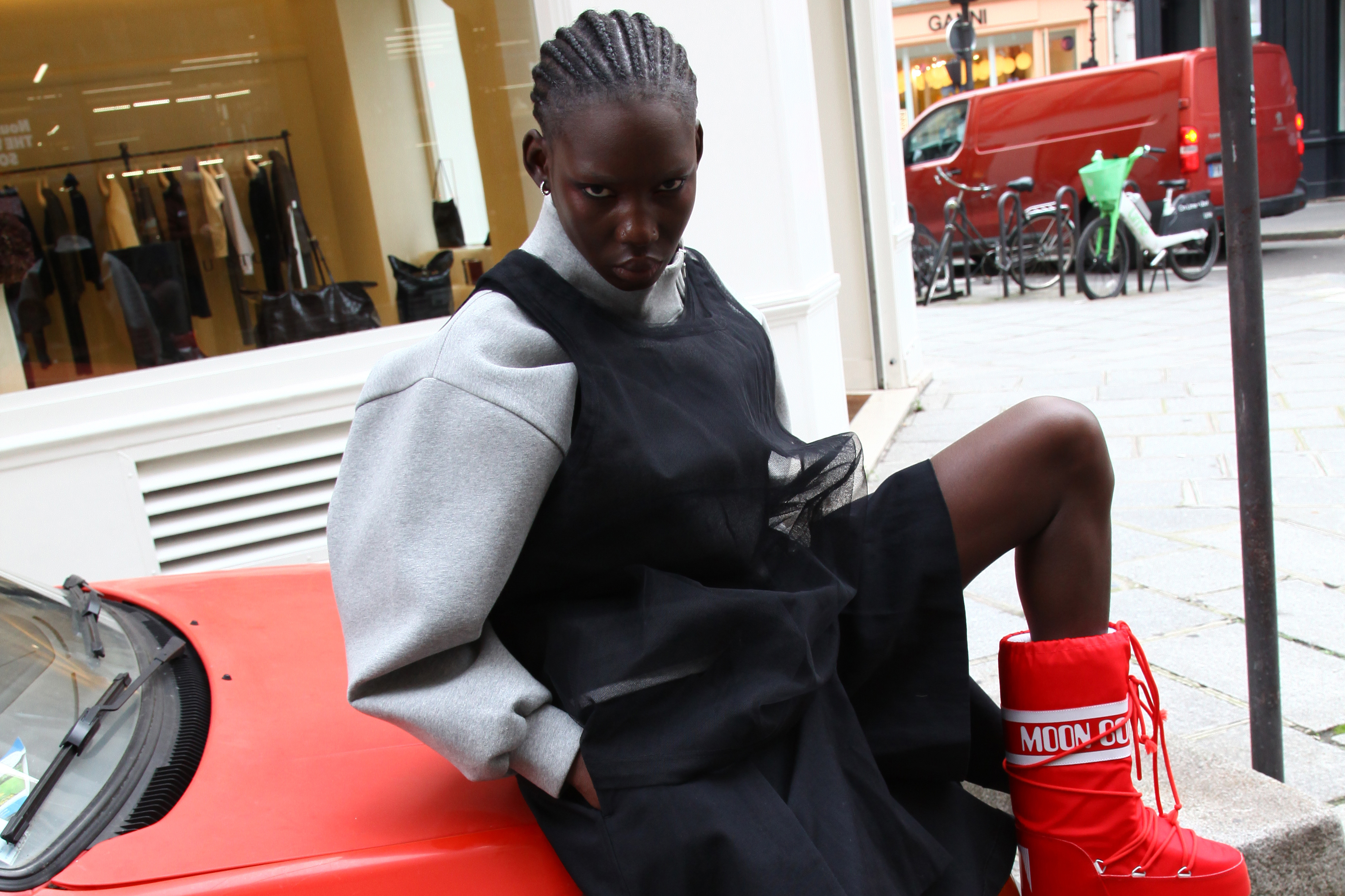
Photographer Cristian Martinelli
Art Director Andrea Ciccarella
Stylist Lorenzo Oddo
Make Up Artist Valentina Raimondi @ Interlude Project
Hair Stylist Grazia Cassanelli
Talent Management Pietro Camonchia, Metatron e Taiga
Press Office Elena Tosi
Producer Raven Narvaiz
Photographer Assistants Anna Mangone, Edda Pagani, Egidio Sterpa
Stylist Assistant Francesco Baldassari
Make Up Artist Assistant Orso Caffi

Photo Editor Mila Forte

EIC Valentina Ilardi

Andrea Ciccarella, Cristian Martinelli, Lorenzo Oddo, Raven Narvaiz

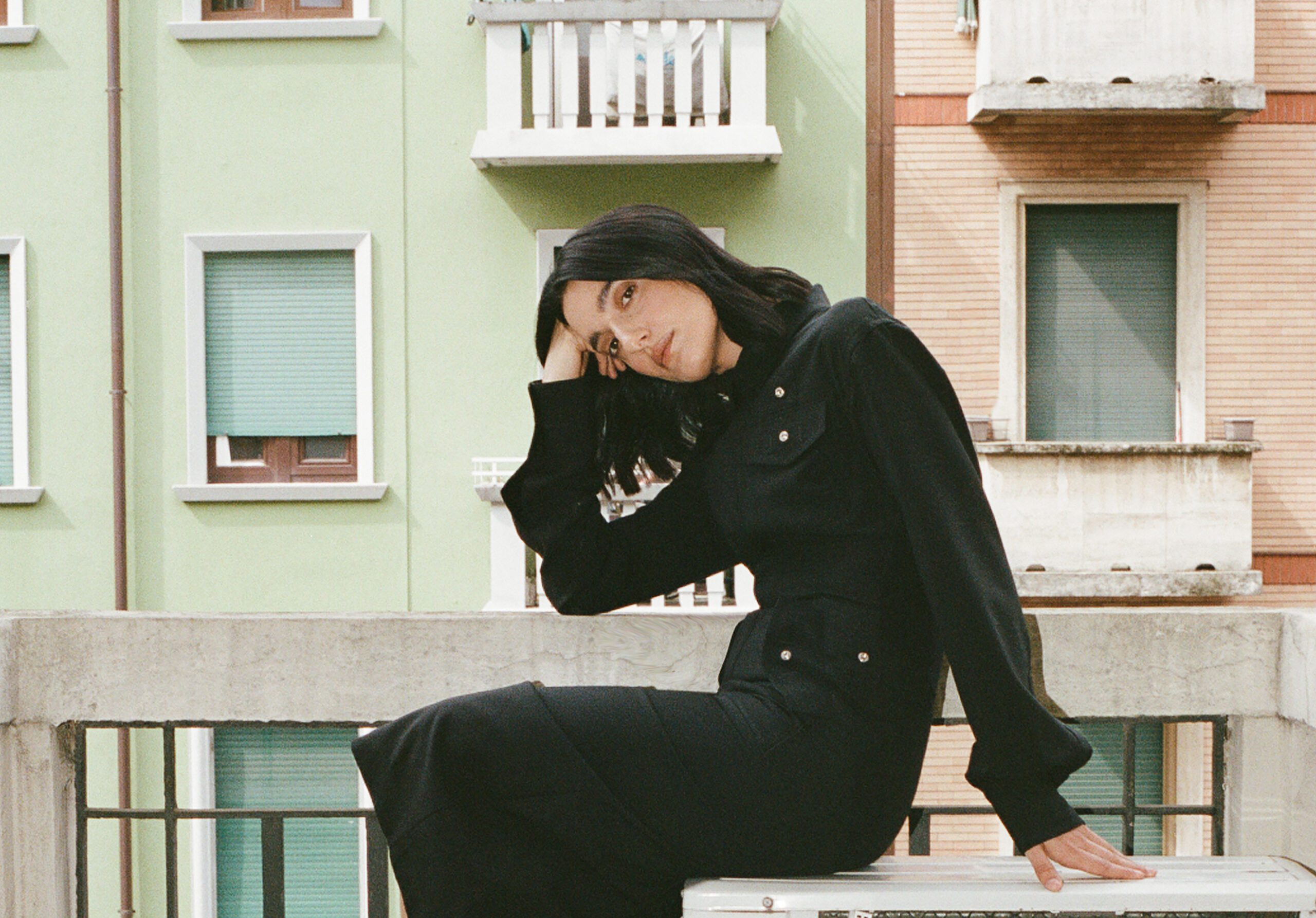
Levante — a wind that moves across the Mediterranean carrying the feeling of transition rather than arrival. A name that seems to reflect the way her work has evolved over the years: constantly shifting, yet never losing intimacy. Moving between writing, music and imagery, she balances intensity with restraint, emotion with precision. Rather than chasing definition, she appears more interested in transformation — in what changes quietly beneath the surface.

Her new album Dell’amore il fallimento e altri passi di danza moves through the many faces of love with that same restless intelligence — a record that drifts from the delicate melancholy of “Sei Tu” to “Malià”, a track that conjures a Pigalle night populated by free spirits who mistake no-one for their own, and desire for freedom. Less a collection of songs about love’s failures than a full choreography of how love actually moves through a body.

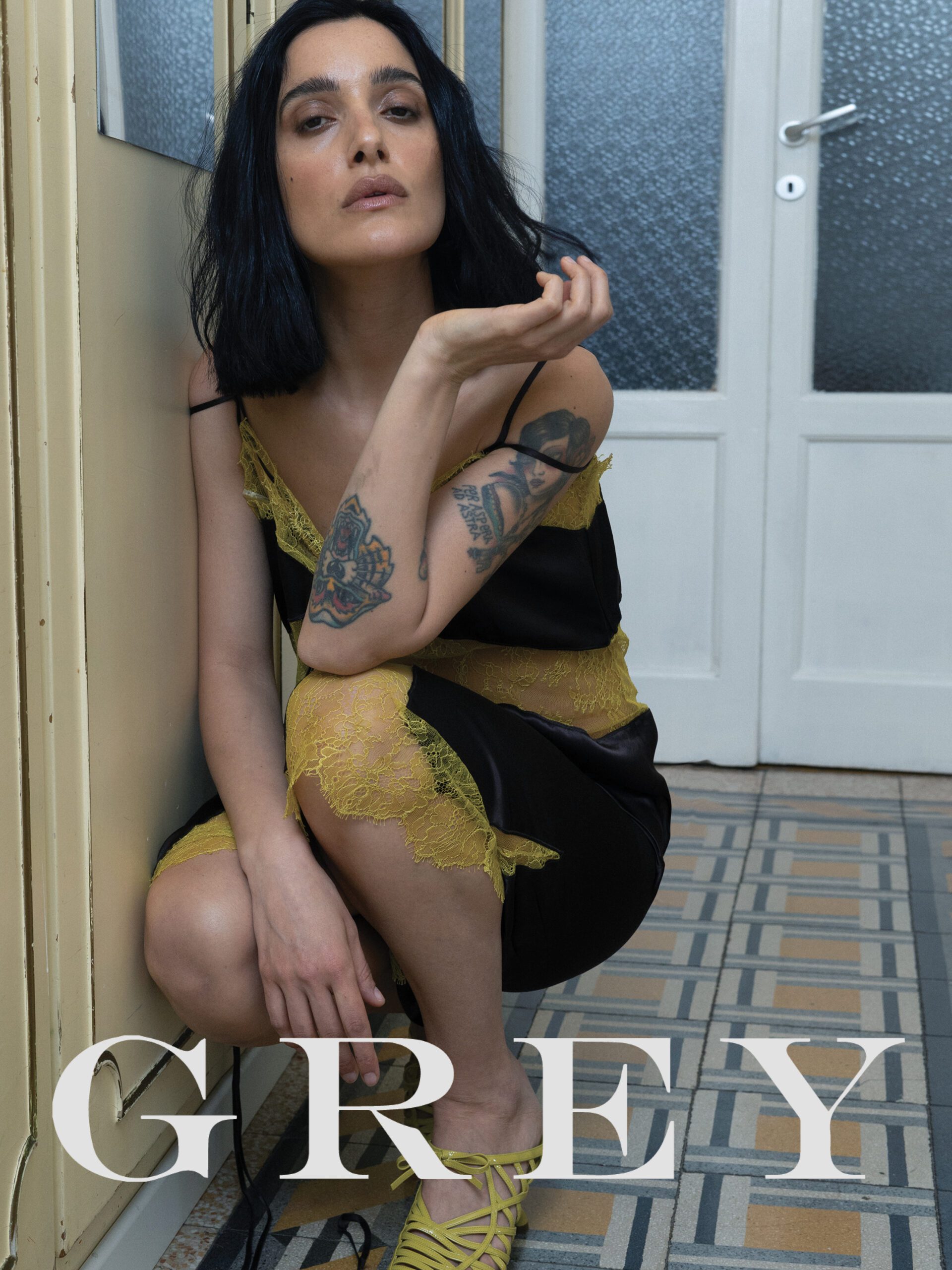
For GREY Magazine, we spoke with Levante about discipline, visibility, silence, identity and the subtle forms of freedom that emerge with time.

“Levante” is a name that evokes direction, movement, light. Do you still see yourself in it today, or has it taken on a different meaning over time?
L: Honestly? I think I only grew into this name with time. Levante found me — I wasn’t looking for it. I was simply Claudia: writing, singing, existing. But when they gave me this nickname at twelve years old, it was as if, almost at the very outset of this life built on music and words, I’d been handed a name to present my voice to the world, my thoughts. Growing up, I came to understand the weight — and the power — of carrying a name like that around.

Would you call yourself a disciplined person, or do you impose discipline on yourself to keep from losing control?
L: Discipline is probably the thing furthest from how I move through the world — and yet, I think it’s all a matter of perspective. To me, disciplined people are the ones who manage, consistently, to keep the pace — never speeding up, never slowing down. Discipline is that repeated, continuous gesture that leads to a sure result, not necessarily a winning one. Me? I’m disciplined only when I set myself a goal, write out a chapter of my life, and once it’s done — usually with a certain pride — I go straight back into the chaos. You could say my relationship with discipline is… elastic.

When you feel yourself losing balance, what’s the first part of you to go?
L: My head checks out on me. I’ve lost my balance only a few times, but they were unforgettable. When my inner world goes dark, I get scared. By now I’ve known myself for forty years — I’m a factory that’s always running: ideas, projects, journeys, visions. My creativity never sleeps. But when I lose balance, the gears grind to a halt and the lights go out.

In your work, you come across as emotionally controlled — and yet you let something very vulnerable show through. In real life, do you actually put yourself out there, or do you curate what people get to see?
L: I don’t feel controlled at all. Actually, when I look back at myself I never like what I see — precisely because I recognize myself as out of control. It’s as if my instincts, whether emotional or aesthetic, override everything else. My enthusiasm, my awkward way of being around people without being able to keep my hands to myself — because physical connection is constant for me — makes me feel out of place. So in real life? I’m an open book.

Is there something people project onto you that feels completely off?
L: Do we have enough space in this interview for me to write an essay on the hundreds of thousands of times I’ve been totally misread? But I don’t want to blame anyone else — I’ll just say that clearly I haven’t been transparent enough. For the record: I’m actually hilarious.

Have you always had this clarity when it comes to articulating intense emotions, or is it something you built as survival mechanism?
L: I don’t think clarity is really part of how I tell stories. I’ve always looked at what was happening to me through the lens of my own sensitivity — which, inevitably, is not a fully objective filter. I wonder who is ever clear-headed enough to observe themselves and what’s happening around them. I don’t think that person exists. What I do think, though, is that I’ve always tried to see things from different angles — to understand as fully as possible.

When you change, do you notice right away — or only after you’ve already lost something?
L: Life and trauma have trained me to move on fast. For a long time my mantra was “I’m ready for anything” — because I refused to be caught off guard again after losing my father, so slowly, so suddenly, all at once. So when I change, I really change. I move forward. I don’t look back — I might cry, but only a little, only for a moment.

Are there parts of your sensitivity you feel the need to keep completely out of other people’s sight?
L: Plenty of my fears, nobody knows. Some of them, for a very long time, I didn’t even know myself. There are fragile parts of me that I don’t even find interesting. I’d rather spare others the boredom too.

Is there something you’ve stopped chasing over the years?
L: Exactly that: other people. I stopped chasing people, stopped asking for explanations, stopped having expectations. Other people’s choices — I leave them right where they were made. I don’t carry them into my journey, taking up space that belongs to things that actually matter to me.

And on the flip side — something you still can’t let go of?
L: I don’t think I know how to give up my nomadic spirit — that constant urge to keep boredom at arm’s length and resist any sedentary way of thinking. To flee any vital perimeter that’s held me too long. I cannot shake my restlessness.

Is there a memory that can still bring you back to yourself when you feel distant from who you are?
L: No — I never drift far from myself. I’m deeply anchored to reality; I’d say it’s actually my obsession, staying grounded. Because I find every form of diva-ism genuinely repulsive.

You have a very recognizable aesthetic — but it never feels like a cage. Does it weigh on you to be associated with a fixed image?
L: Yes, every attempt to box me in does weigh on me. I’m too many things to fit inside a single definition.

Do you think a complex woman today is truly heard — or just made more “consumable” by the media?
L: I think complex people, in general, suffer — but they always find a way to be understood and heard. I’m not sure what “consumable” means exactly, but I know that plenty of times I’ve had to strip down an emotion or a thought just to make sure the message actually landed.

Do you ever want to disappear completely — stop working, stop sharing yourself, stop being seen?
L: Yes, it happens — and it’s happened. Especially the not-sharing-myself, not-being-seen part. But not working? Never. Not that.

When that happens, can you actually switch off — or do you stay inside the narrative anyway?
L: I never switch off. Never. Because I have this tendency to transform anything I enjoy, anything that moves me or surprises me, into something I create. It doesn’t matter what form it takes — as long as I get to make something.

What kind of people actually manage to get close to you these days?
L: People with a massive sense of humor. The ones who can laugh at themselves and make others laugh — they’re usually wired with serious intelligence, and without that, other people’s company is nothing but a nuisance to me.

And who do you push away immediately?
L: Rude people. People who are out of place, oblivious to context, with zero social awareness — they cannot be around me. I’d end up in a fight within minutes.

Have you ever been afraid that silence would be read as weakness or absence?
L: No, I’ve never had that fear — mostly because, unfortunately, I am constitutionally incapable of keeping my mouth shut.

What’s the least visible part of your work — and also the most authentic?
L: Writing. That moment when I’m truly alone with myself, in front of an instrument and blank pages. That’s the part no one will ever see — where I go down into the basement of my own emotions and keep descending. Is there anything more real than a person laughing or crying alone, with no intention of performing it for anyone?

Is your relationship with creativity still instinctive — or does strategy, control, and image-building factor in now?
L: No strategy. None. If I’d been strategic, I would have made very different choices — smart ones. I would have collaborated with whoever was hot at the moment and packed my records full of features. That’s never been how I operate, and it never will be. I’ve definitely come to accept that different worlds exist and can coexist — and that none of them is better or worse than the others. Actually, no. That’s not true. Some worlds are absolute garbage.

When do you feel truly aligned with yourself?
L: When I move without stress and face my commitments in an orderly way — that’s when I feel like the world’s timeline and my own are finally running in sync, without deadlines or impossible schedules crushing me.

And when do you feel like you’re playing a version of yourself?
L: I don’t fall for that anymore. There was a time I tried to live up to my own name, to what people said about me — I didn’t want to let anyone down. That whole system doesn’t exist anymore. I dismantled it.

Is there a part of you that you feel you’ve never truly shown anyone?
L: Just one?

More from GREY